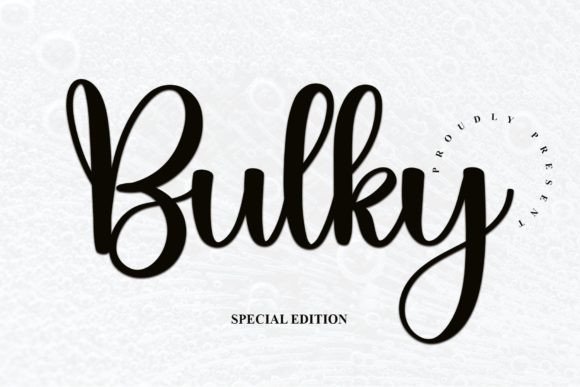
Bulky: The Art of Modern Handwritten Typography
In the vast landscape of digital design, typography serves as the voice of your brand before a single word is read. Among the myriad options available to creators, Bulky has emerged as a distinctive choice for those seeking to blend the warmth of human touch with the precision of modern aesthetics. It is not merely a font; it is a design tool that bridges the gap between casual authenticity and refined elegance. Whether you are a seasoned graphic designer or a small business owner managing your own branding, understanding the nuances of Bulky can significantly elevate your visual communication.
Defining the Aesthetic: What Makes Bulky Unique?
At first glance, Bulky presents itself as a handwritten typeface, but it defies the messy, unpredictable nature often associated with script fonts. It is described accurately as beautiful and refined, offering a level of consistency that is rare in hand-lettered styles. The strokes are deliberate, carrying a weight that feels substantial yet graceful. This balance is what makes it "classy and modern," allowing it to sit comfortably alongside minimalist design elements without being overshadowed.
The character of Bulky lies in its versatility. Unlike rigid serif fonts that can feel cold or overly corporate, this typeface injects personality into a project. However, it avoids the pitfalls of novelty fonts that quickly become dated. Instead, it offers a timeless quality that appeals to contemporary tastes while retaining a classic sense of craftsmanship. For designers, this means creating visuals that feel current today but will remain relevant tomorrow.
Core Applications and Use Cases
One of the most compelling aspects of Bulky is its adaptability across various mediums. While many handwritten fonts are restricted to informal contexts, Bulky’s refined structure allows it to perform exceptionally well in professional and high-stakes environments. Here are some primary areas where this font shines:
- Logos and Branding: A logo needs to be memorable and legible. Bulky provides a unique signature-like quality that helps brands stand out in crowded marketplaces, particularly in lifestyle, fashion, and boutique sectors.
- Wedding Designs: The romantic yet clean lines of Bulky make it an ideal candidate for wedding invitations, save-the-dates, and menu cards. It conveys intimacy without sacrificing readability.
- Social Media Posts: In the fast-paced world of Instagram and Pinterest, visuals must capture attention instantly. Using Bulky for quotes, announcements, or product highlights adds a personal touch that resonates with audiences seeking authentic connections.
- Stationery and Packaging: From business cards to product labels, Bulky adds a tactile feel to printed materials. It suggests care and attention to detail, qualities that consumers often associate with premium products.
Why Professionals Choose Bulky
For creative professionals, the choice of typography is rarely arbitrary. When selecting Bulky, designers are often looking for a solution that reduces the need for extensive customization. Because the font already possesses a high degree of refinement, it requires less tweaking to look polished. This efficiency is invaluable in tight deadlines where quality cannot be compromised.
Moreover, the font’s modern appeal aligns with current design trends that favor authenticity. Consumers are increasingly skeptical of overly polished, corporate imagery. They respond positively to designs that feel human-made. Bulky taps into this psychological preference, making brands appear more approachable and trustworthy.
Evaluating Suitability for Your Project
While Bulky is versatile, it is not a one-size-fits-all solution. Understanding when to use it—and when to avoid it—is crucial for effective design. To help you determine if this typeface is right for your needs, consider the following factors:
- Tone of Voice: If your project requires a serious, authoritative, or highly technical tone, a traditional serif or sans-serif font might be more appropriate. Bulky excels in contexts that benefit from warmth, creativity, and personal connection.
- Legibility Requirements: Although Bulky is refined, it is still a handwritten style. For long bodies of text, such as articles or legal documents, it may cause eye strain. It is best used for headlines, short phrases, and accent text rather than paragraphs.
- Target Audience: Consider who will be viewing your design. Younger demographics and creative industries tend to appreciate the modern flair of Bulky. Traditional industries like finance or law may prefer more conservative typography.
Practical Tips for Using Bulky Effectively
To get the most out of Bulky, it is essential to pair it thoughtfully with other design elements. Here are some practical guidelines to ensure your designs remain balanced and impactful:
Pairing with Complementary Fonts: Since Bulky has a strong personality, it pairs best with neutral, clean sans-serif fonts. This contrast allows Bulky to take center stage as the decorative element while the secondary font handles informational content. Avoid pairing it with other complex scripts, as this can create visual clutter and reduce readability.
Spacing and Hierarchy: Handwritten fonts often require careful attention to kerning and leading. Ensure there is enough white space around text set in Bulky to let it breathe. Crowding it with other elements can diminish its elegant appearance. Use size and weight to establish a clear hierarchy, letting Bulky guide the viewer’s eye to the most important information.
Color Considerations: The refined nature of Bulky allows it to work well with a wide range of color palettes. However, soft pastels, earth tones, and monochromatic schemes often enhance its sophisticated vibe. For bold statements, high-contrast combinations like black on white or deep navy on cream can make the typography pop.
Real-World Scenarios: Bringing Bulky to Life
Imagine a local coffee shop launching a new line of artisanal blends. Using Bulky on their packaging labels immediately communicates a sense of craft and care. The handwritten style suggests that each batch is curated with attention, differentiating it from mass-produced competitors. On social media, the same font used in promotional graphics creates a cohesive brand identity that feels inviting and community-focused.
Consider also a freelance photographer updating their portfolio website. By using Bulky for their name and section headers, they convey a sense of artistic flair and personal service. Potential clients perceive the photographer as someone who values aesthetics and individuality, traits that are highly desirable in creative services. This subtle typographic choice can influence hiring decisions by aligning the visual presentation with the desired brand perception.
Limitations and Considerations
No design tool is without its limitations. It is important to acknowledge that Bulky, like all handwritten fonts, may face challenges in certain digital environments. On low-resolution screens or at very small sizes, the finer details of the strokes might blur, affecting legibility. Therefore, it is advisable to test the font across different devices and sizes before finalizing any design.
Additionally, because handwritten styles are popular, there is a risk of overuse. To maintain uniqueness, designers should experiment with custom layouts, color overlays, or combining Bulky with unique graphical elements. This ensures that the final output remains distinct and tailored to the specific brand identity.
Conclusion: Embracing the Human Touch
In an era dominated by digital automation, the human touch has become a valuable commodity. Bulky offers a way to infuse that humanity into your designs without compromising on professionalism or modernity. Its refined handwritten style provides a perfect balance for logos, branding, invitations, and social media content, making it a versatile asset for creators and business owners alike.
By understanding its strengths, limitations, and ideal applications, you can leverage Bulky to create visuals that resonate deeply with your audience. Whether you are designing a wedding invitation or rebranding a startup, this typeface invites you to communicate with clarity, warmth, and style. As you explore its possibilities, remember that the best typography is invisible in its function but unforgettable in its impact. Let Bulky be the voice that helps your message stand out in a noisy world.
For those interested in exploring more about typography trends and design resources, consider visiting reputable design blogs or joining online communities where creators share their experiences with tools like Bulky. Engaging with these communities can provide further inspiration and practical tips for integrating handwritten fonts into your workflow effectively.